The palm oil supply chain operates in some of the most unforgiving environments in global agriculture. From remote, mud-drenched plantations in Papua New Guinea and Indonesia to tropical logging roads in West Africa, commercial vehicles face constant punishment from humidity, uneven terrain, and heavy payloads.
In this sector, logistics efficiency directly dictates yield quality and total profitability:
Fresh Fruit Bunches (FFB) Urgency: FFB must reach processing mills within a strict 24-hour window after harvesting. Any logistical delay causes a sharp spike in Free Fatty Acid (FFA) levels, permanently degrading crude oil grade and selling price.
Crude Palm Oil (CPO) Thermal Control: CPO requires continuous thermal management and food-grade liquid containment during long-haul transit to prevent crystallization before reaching refineries or ocean bulk terminals.
A single fleet breakdown during peak harvest season can result in thousands of dollars in spoiled crops and operational downtime. Optimizing your transport fleet requires purpose-built engineering matched to every phase of the supply chain.
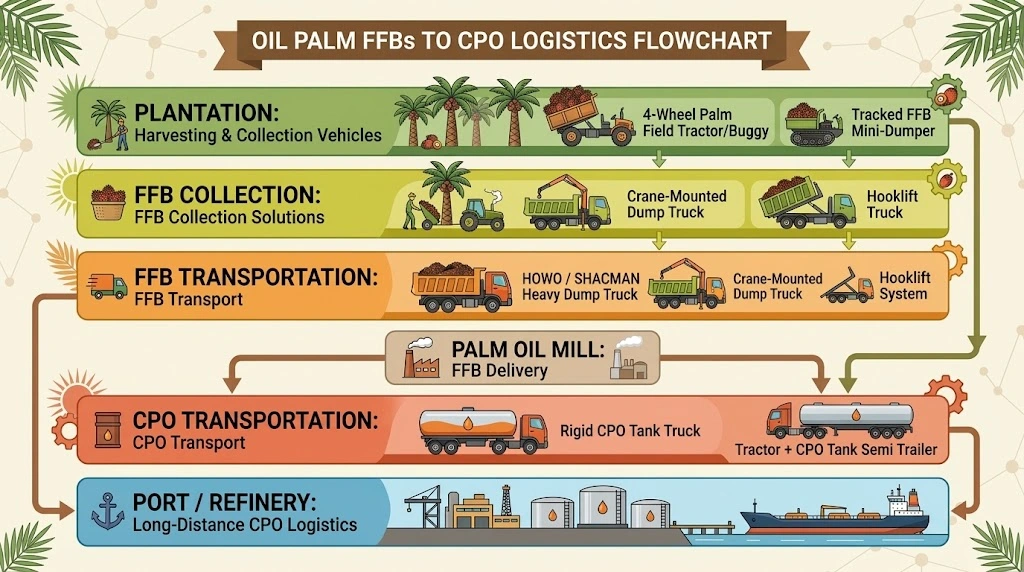
Table of Contents
- Field-to-Mill FFB Transport: Conquering Deep Mud & Tight Timelines
- Long-Haul CPO Logistics: Maintaining Liquid Temperature & Purity
- Proven Maintenance & Fleet Optimization for Tropical Climates
- Conclusion: Partnering for Custom Palm Oil Fleet Solutions
Field-to-Mill FFB Transport: Conquering Deep Mud & Tight Timelines
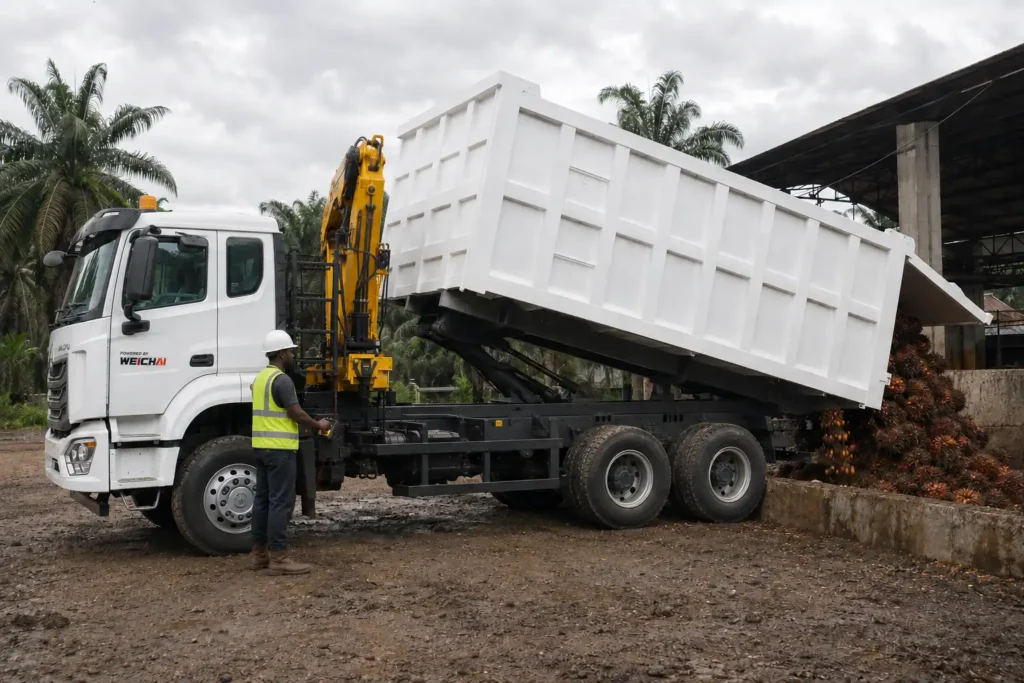
Transporting raw fruit bunches out of plantation blocks is the toughest link in the chain. Peat soils, steep inclines, and narrow tree-row clearances demand specialized off-road vehicles that prevent fruit bruising while ensuring non-stop operations.
Heavy-Duty Engineering Specifications for FFB Fleets
To prevent chassis twisting, frame fracture, and vehicle entrapment on unpaved plantation tracks, operators must look for specific vehicle configurations:
Reinforced Chassis Architecture: Multi-layer, heavy-duty chassis frames (such as 8+8mm or 8+5mm double-layer steel) engineered to absorb extreme torsional stress.
High Ground Clearance & All-Wheel Drive: 6×4, 8×4, or 4×4 drive systems featuring hub-reduction axles (wheel-side reduction) and inter-axle/inter-wheel differential locks to generate maximum low-end torque in deep mud.
Specialized Cargo Systems:
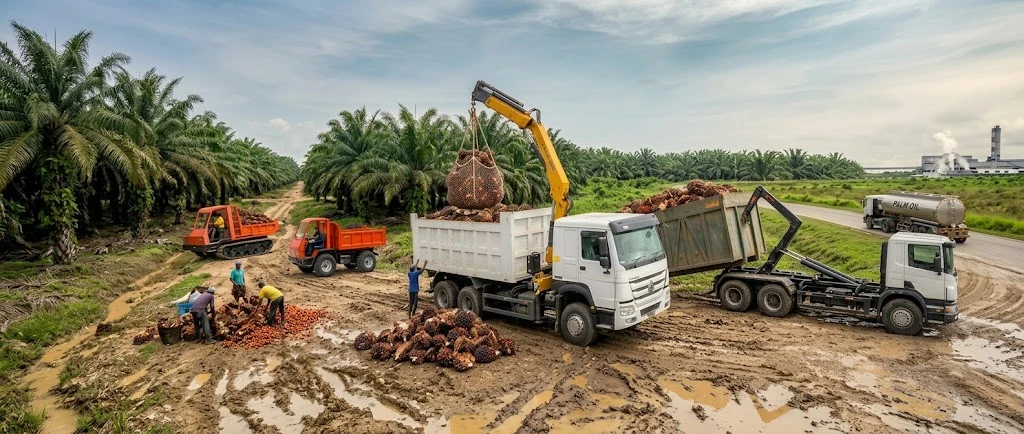
Crane-Mounted Tipper Trucks: Integrate hydraulic boom cranes to lift filled fruit cages or heavy logs directly into the dump bed without auxiliary equipment.
Hooklift Roll-Off Container Trucks: Deploy multiple detachable containers directly into plantation blocks for continuous harvesting, reducing truck idling time to zero.
High-Lift Hydraulic Tippers: Allow direct offloading into high-sided mill reception hoppers, eliminating manual labor and cutting cycle times by up to 40%.
Long-Haul CPO Logistics: Maintaining Liquid Temperature & Purity
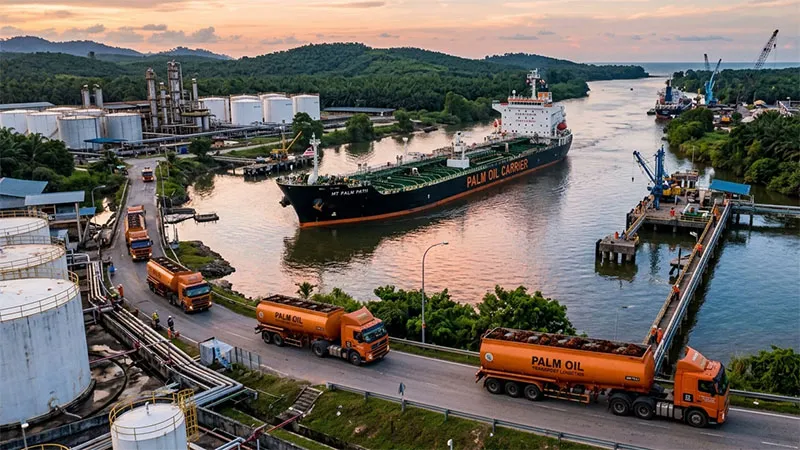
Once the mill extracts Crude Palm Oil, the challenge shifts from rugged terrain navigation to liquid volume bulk management and thermal retention over highways and port access corridors.
Key Technical Standards for CPO Tankers
Polyurethane Thermal Insulation: CPO solidifies when temperatures drop below 35°C–40°C. Heavy-duty CPO tank trailers feature insulated double-wall skins to maintain fluid warmth during long transit times.
Internal Steam Heating Coils: Stainless steel heating coil pipes built inside the tank allow receiving port terminals to pass external steam through the cargo, rapidly re-liquidifying settled CPO prior to pumping.
Food-Grade Tank Construction: Manufactured using 304 or 316L food-grade stainless steel (or specialized anti-corrosive lined carbon steel) to prevent iron contamination and preserve oil purity.
Anti-Surge Baffles & Low Center of Gravity: Internal division baffles minimize liquid sloshing during sudden braking or cornering on unpaved logging roads, safeguarding vehicle roll stability.
Proven Maintenance & Fleet Optimization for Tropical Climates
Operating commercial trucks in high-humidity, dust-heavy, and muddy environments demands preemptive vehicle specification choices:
Cyclone Snorkel Air Intakes: Prevent fine dust, airborne debris, and tropical rainwater from breaching engine air filters and damaging cylinders.
Reinforced Multi-Leaf Suspensions: Upgrade to extra-thick leaf springs, heavy-duty shock absorbers, and wear-resistant polyurethane bushings to withstand harsh impact forces.
Telematics & GPS Fleet Monitoring: Track real-time driver routes, reduce fuel theft in remote jungle sectors, and monitor engine idle metrics between mill unloadings.
Conclusion: Partnering for Custom Palm Oil Fleet Solutions
Optimizing palm oil transport requires aligning vehicle chassis, powertrain hydraulics, and cargo bodies directly with your regional plantation geography. Whether operating across PNG’s mountainous river valleys or West Africa’s coastal plains, purpose-built heavy vehicles protect your oil quality and yield higher operational ROI.
🚀 Build Your Heavy-Duty Transport Fleet Today
Explore our full line of heavy tippers, crane trucks, hooklifts, and CPO tankers at our dedicated Palm Oil Logistics Solutions Hub, or contact our technical engineers today for a custom fleet quotation.
You can also contact our export team right away. Let’s work together to create the solution that best suits your business.