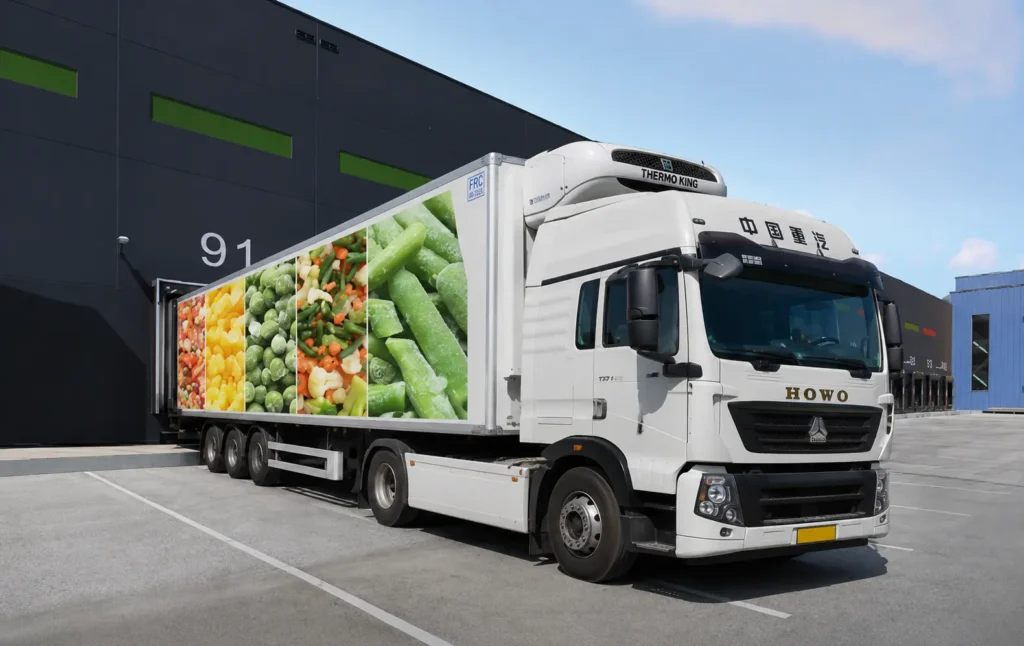
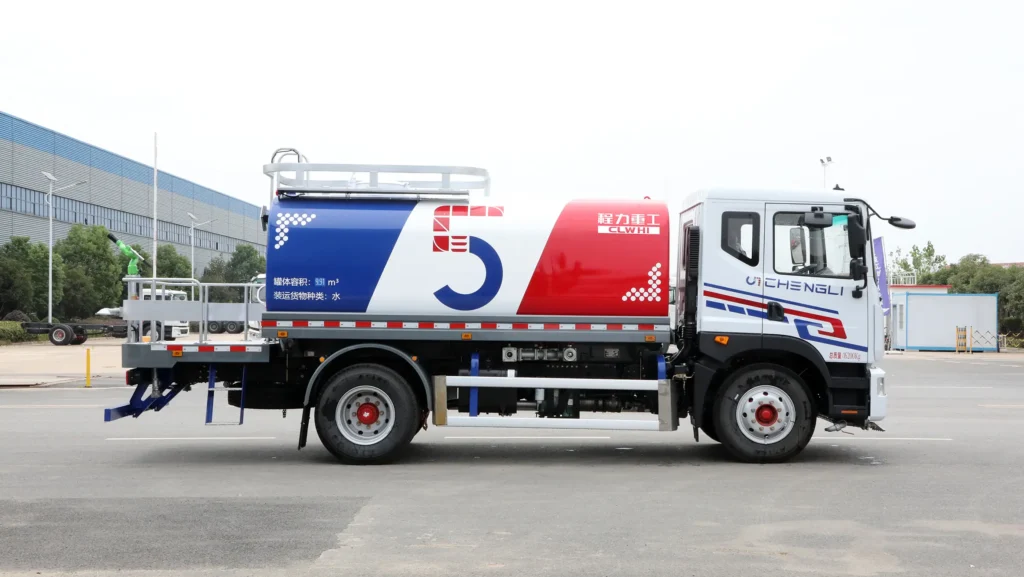
In the global landscape of road transport and mining logistics, the Andes Mountains (Cordillera de los Andes) in South America are undoubtedly one of the most challenging regions. From Calama, Chile’s copper mining hub, to the high-altitude city of Arequipa in Peru, and along the transboundary mountain highway spanning the Argentina-Chile border, long downhill stretches—often tens of kilometers long with vertical drops of thousands of meters—constitute a “life-or-death test” for heavy-duty truck drivers.
Under such extreme operating conditions, if a heavy-duty truck loaded with dozens of tons of cargo were to descend a hill relying solely on traditional wheel-hub friction brakes, the braking system would suffer thermal fade within minutes due to intense friction, resulting in complete brake failure. To conquer this “high-altitude no-go zone,” hydraulic retarders (Retardador Hidráulico) have become an indispensable “guardian of safety” for access to high-altitude mining areas in South America and for cross-border transportation.
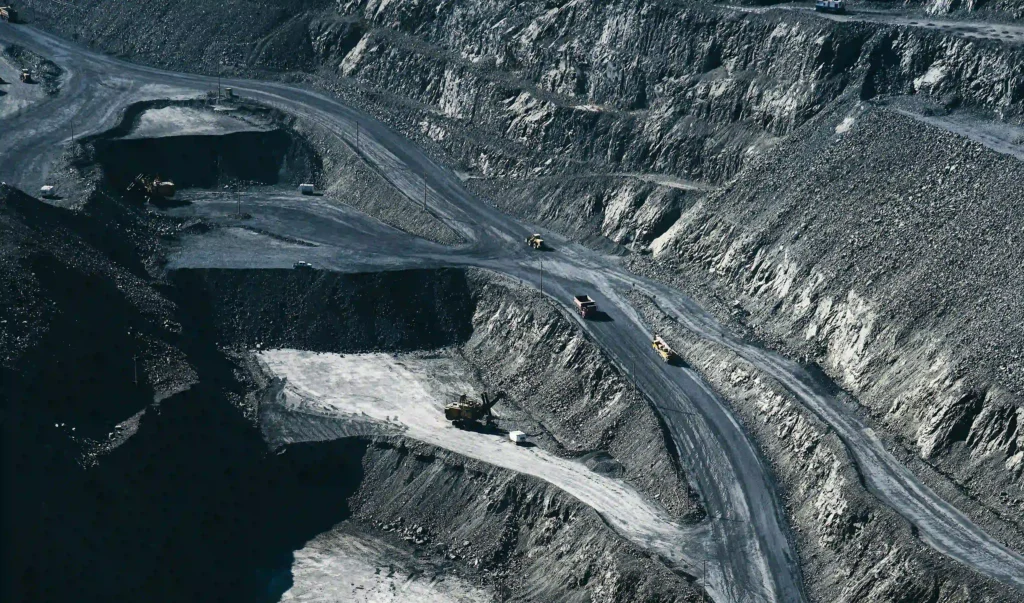
The “Road Challenge” in South America's High-Altitude Mining Regions: The Limits of Conventional Braking
As major global mineral exporters, Chile and Peru’s mining logistics are characterized by three extreme features: Heavy Haul (Carga Pesada): A heavy-duty truck combination fully loaded with copper concentrate (Concentrado de cobre) or heavy machinery, often weighing between 45 and 60 tons or even more. Long Downhill Descents (Descensos Prolongados): Mining roads in the Andes not only feature steep gradients (typically ranging from 6% to 10% year-round) but also extremely long downhill stretches; continuous descents of 30 to 50 kilometers are common. Extreme Conditions: High altitudes result in thin air, reducing the efficiency of engine-assisted air brakes; this is compounded by unpredictable mountain weather and slippery road surfaces. On such roads, relying solely on traditional service brakes (brake pads and drums) causes the vehicle’s immense kinetic energy to be entirely converted into heat, causing brake pad temperatures to instantly surge to over 400°C. This not only causes brake failure but also leads directly to tire blowouts and fires due to the high temperatures of the wheel rims—a fatal cause of accidents in high-altitude transportation in South America.
The Golden Spot in the Powertrain: How Does a Retarder Work?
A hydraulic retarder is a non-contact, fluid-assisted braking device. In the powertrain of high-end heavy-duty trucks such as the Shacman Delong, it is precisely positioned at the rear end of the transmission (Caja de cambios) and the front end of the drive shaft (Eje de transmisión).
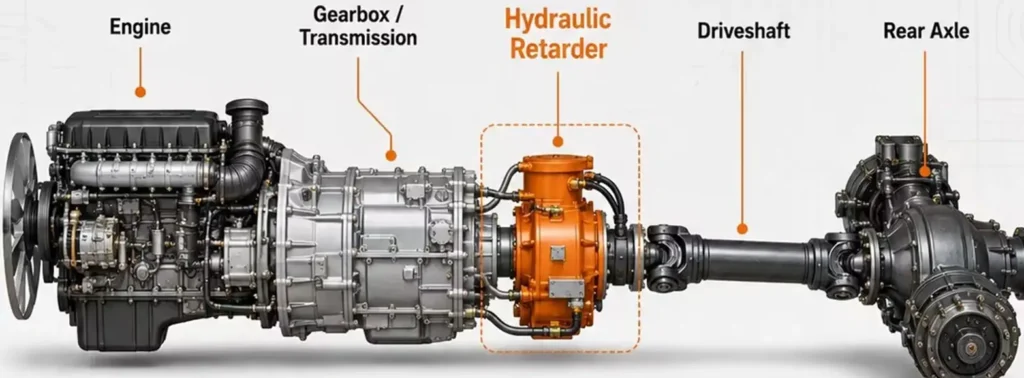
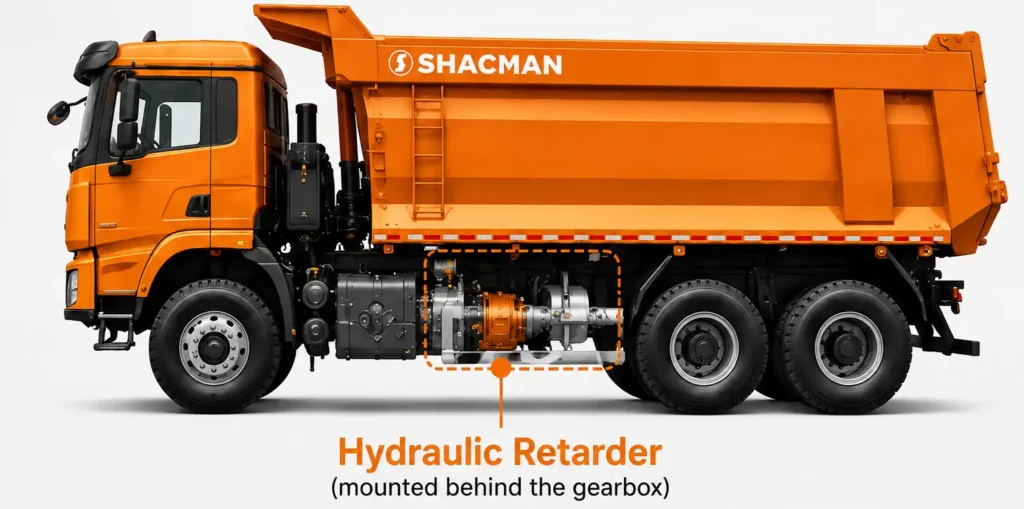
This design is known as a “rear-mounted retarder.” Rather than applying direct, rigid friction to the wheels, it applies a resistive torque directly to the transmission’s output shaft. Its internal operating principle can be summarized in the following three steps:
1. Fluid pressurization: When the driver moves the retarder lever located below the steering wheel, specially formulated transmission fluid or the vehicle’s coolant is rapidly pressurized into the retarder’s working chamber.
2. Using Flexibility to Overcome Rigidity: The working chamber contains two opposing impellers—a rotor that rotates at high speed with the drive shaft and a stationary stator. The rotor drives the fluid to spin violently and flings it toward the stator. Upon impacting the stator, the fluid reverses direction, generating a massive reaction force that acts against the rotor. This fluid resistance is transmitted through the drive shaft to the rear axle (Eje motriz), achieving a significant deceleration effect.
3. Heat Conversion: At this moment, 100% of the vehicle’s kinetic energy from the descent is converted into thermal energy within the fluid. Subsequently, the heated fluid passes through a heat exchanger, transferring its heat to the vehicle’s cooling system (Sistema de enfriamiento), where it is ultimately dissipated into the air of the Andes Mountains via the high-capacity radiator at the front of the vehicle.
Throughout the entire deceleration process, no mechanical components come into direct contact or experience hard friction, achieving true zero-wear auxiliary braking.
The Three Key Benefits of Hydraulic Retarders for South American Customers
For fleet owners and independent truckers operating in the high-altitude mining regions of Peru and Chile, a standard-equipped hydraulic retarder is by no means a “luxury feature,” but rather a high-return strategic investment that pays for itself quickly and delivers sustained profitability.
1. Ultimate Safety Assurance: Nipping Danger in the Bud On long downhill stretches in Chile or Peru, hydraulic retarder systems can handle over 80% of the vehicle’s non-emergency braking needs. The primary brakes (foot brakes) remain in a state of “standby” and are rarely engaged. This means that in the event of an emergency during a descent—such as a vehicle ahead braking suddenly or a road collapse—the driver’s foot brake retains 100% braking effectiveness, allowing for an immediate stop and completely eliminating the nightmare of brake fade.
2. Perfect Speed Control: Greater Control on Descents (Más control en bajadas) Mountainous roads in South America are filled with tight curves. Hydraulic retarder systems typically feature multiple braking settings and support a downhill cruise control function (Crucero). Drivers simply set a safe speed (e.g., 40 km/h), and the retarder automatically adjusts fluid resistance based on changes in gradient, firmly locking the vehicle’s speed at the preset value. Drivers no longer need to panic and repeatedly apply the brakes, significantly reducing fatigue and boosting confidence behind the wheel.
3. “Soft Braking” Protection: Say Goodbye to Skidding Hazards on Slippery Roads High-altitude sections of the Andes Mountains are often covered in snow, black ice, or mud. If traditional mechanical brakes are applied too forcefully, they can easily cause the wheels to lock up and skid, leading to the tragic “scissor effect” (Efecto tijera). In contrast, the hydraulic retarder provides a smooth, shock-free fluid resistance torque that prevents wheel lockup, ensuring heavy-duty vehicles maintain perfect traction even on slippery surfaces.

The Business Case: Profit Amplifiers in South American Mining Operations
In addition to the supreme value of human life—which cannot be measured in monetary terms—hydraulic retarder systems also deliver impressive results in reducing total cost of ownership (TCO):
4 to 8 times longer service life for brake pads and drums: In certain mining areas with long slopes in Chile, heavy-duty trucks without retarders may need to replace their brake pads after just a few trips. In contrast, vehicles equipped with standard retarders can significantly extend the service life of their main brake pads, saving fleets substantial costs on parts replacement and minimizing downtime for repairs.
Dramatically reduced tire wear (Menor desgaste de frenos y neumáticos): The high temperatures generated by traditional brakes severely heat the wheel hubs, accelerating rubber aging and even causing blowouts. Retarders keep the wheel hubs at normal temperatures year-round, not only significantly extending tire life but also reducing the blowout rate by over 90%.
Elimination of “Brake Cooling Tanks”: To cool their brakes, many older heavy-duty trucks in South America are forced to install water-spraying systems weighing several tons. This not only increases the vehicle’s curb weight and reduces the allowable payload but also creates significant hazards for following vehicles when water freezes on the road during winter at high altitudes. With a hydraulic retarder installed, there is absolutely no need for a water spray system. The reduced vehicle weight allows for carrying more cargo, leading to higher profits.
Improved operational efficiency: Trucks without retarders must drive downhill in a stop-and-go manner, requiring constant vigilance; in contrast, heavy-duty trucks equipped with retarders can descend at a safe, compliant, and constant maximum speed, significantly shortening single-trip transport times and dramatically boosting both fleet turnover rates and profit margins.
Final Chapter: Loading and Setting Sail for Africa
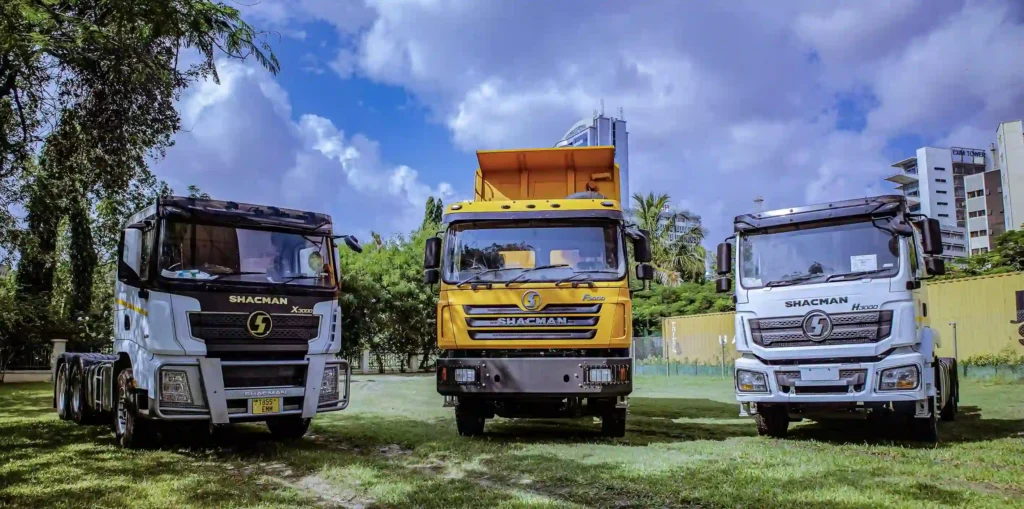
In Chile and Peru—lands put to the test by the Andes Mountains—transportation is not merely a race for speed, but a life-or-death marathon of technology and safety.Modern heavy-duty truck powertrains, epitomized by the SHACMAN X3000 and X Series, have helped countless South American transport companies conquer one long mountain descent after another thanks to their golden combination of “high-performance engines + intelligent transmissions + factory-installed retarder systems.” Faced with high mountains, heavy loads, and treacherous terrain, the hydraulic retarder harnesses the power of technology to build an unbreakable Great Wall of safety and prosperity for South American customers.