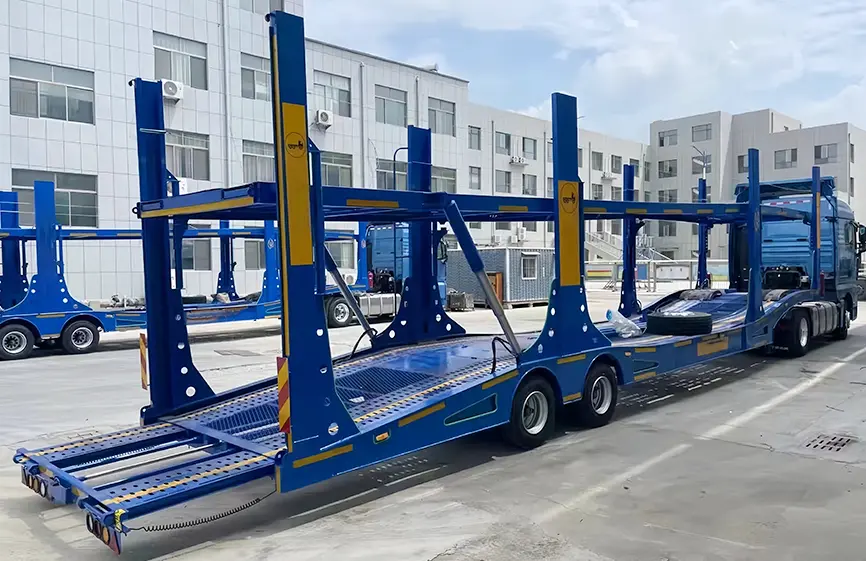
SEMI TRAILER
Semi trailer supplier from China
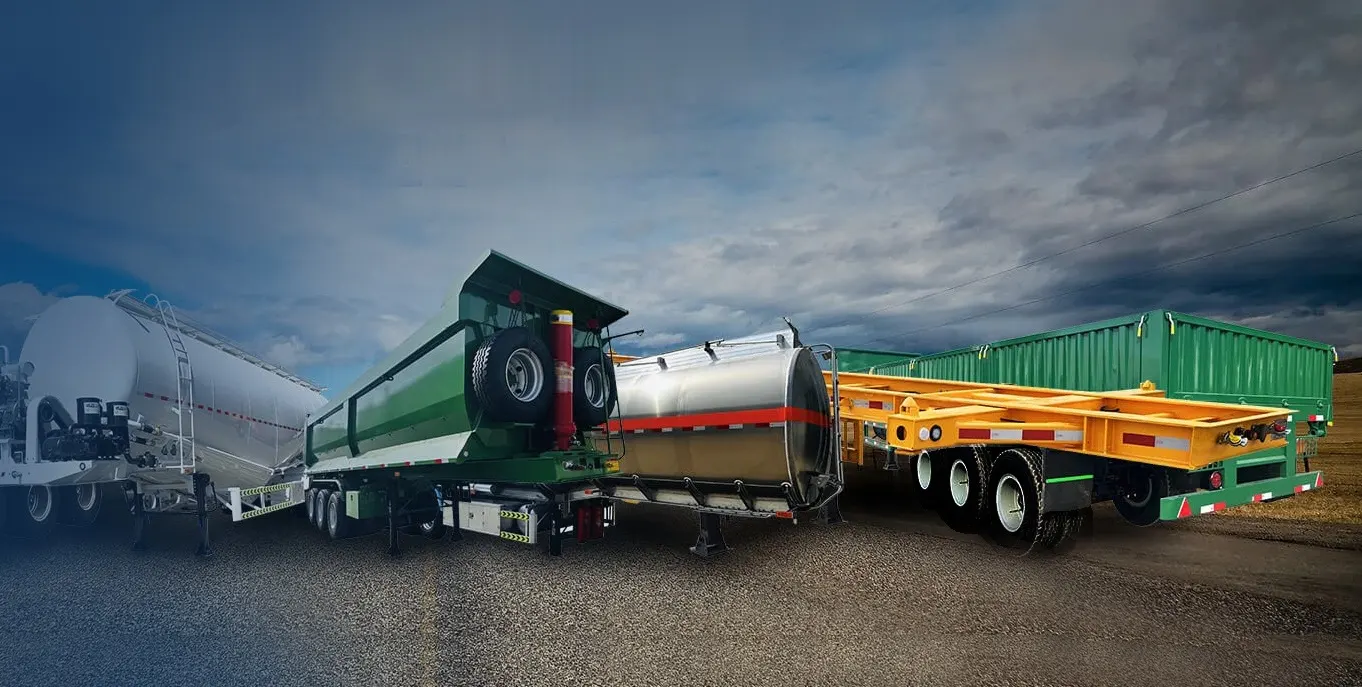
With a wide range of powertrains and a broader selection of models, there’s a CLW truck to suit your business. Learn more about them here.
Why choose us
CLW Industry is a leading manufacturer of high-end special-purpose vehicles in China. The group has obtained numerous certifications, including the National Industrial Product Production License, ISO 9001:2015 Quality Management System Certification, ISO 14001:2015 Environmental Management System Certification, ISO 45001:2018 Occupational Health and Safety Management System Certification, 3C Mandatory Certification, Automotive Energy Conservation and Environmental Protection Certification, Automotive Tax Exemption Certification, ASME (American Society for Mechanical Engineers) Certification, and EU ADR (American Direct Driving Reference) Certification. Its products are sold in over 50 countries and regions worldwide.
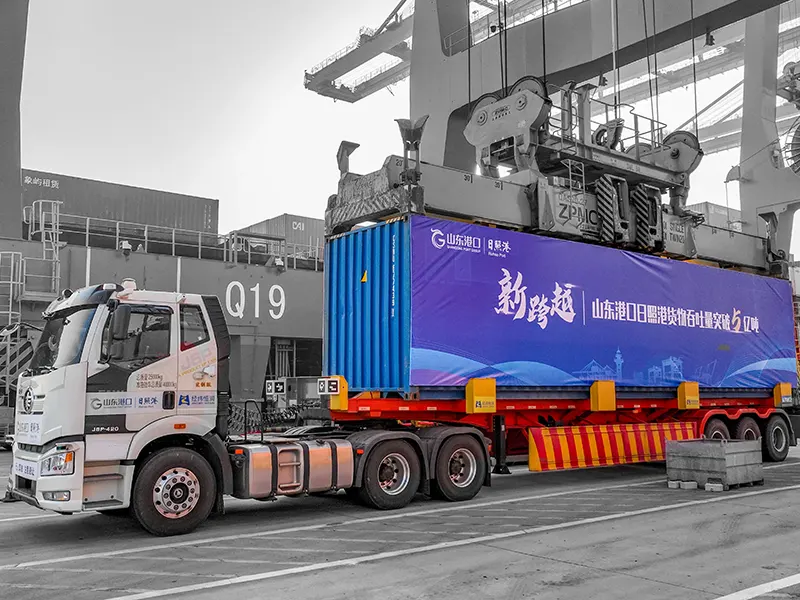
Container trailer truck
Container semi-trailers are a type of semi-trailer used for transporting standard containers and non-hazardous goods tank containers. Their main structure is divided into three types: straight beam, large gooseneck, and small gooseneck. The straight beam type has longitudinal beams extending straight from the rear to the front; the large gooseneck type has a front end approximately 30 cm higher than the rear end but does not bear weight; and the small gooseneck type has a height difference of approximately 10 cm and can bear weight. They are mainly used in port terminals, logistics centers, and other similar scenarios, supporting multimodal transport systems to achieve direct cargo transportation without the need to unload cargo during transshipment.
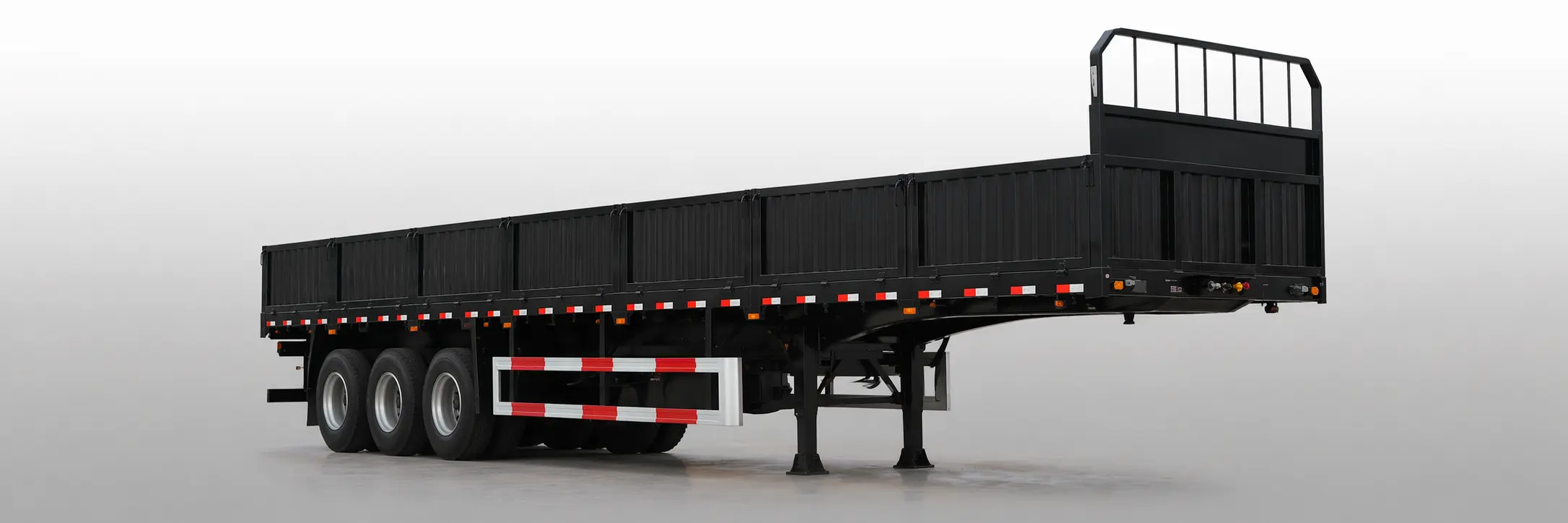
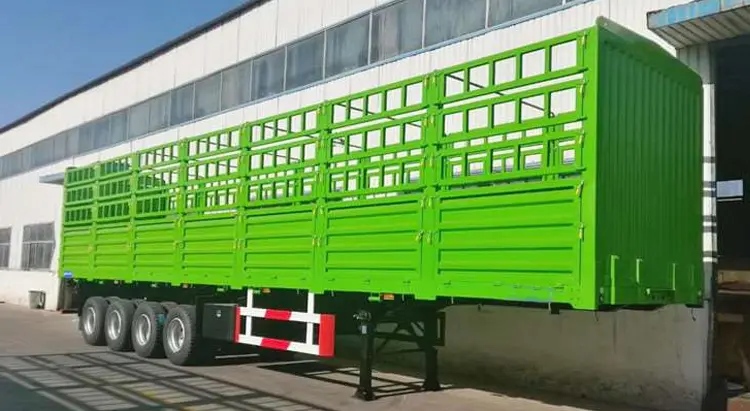
Stake semi trailer
The stake-lift semi-trailer is a semi-trailer with a stake-lift structure for the cargo area. It is mainly used for transporting agricultural and sideline products and lightweight goods. Due to its wide applicability to various types of goods and ease of loading and unloading, this type of semi-trailer has been rapidly adopted in the market. Stake-lift semi-trailers use a stake-lift design for the load-bearing components. The main frame is typically made of high-strength steel to achieve lightweight construction, and the cargo box has a removable roof. Typical models are between 9.5 and 13 meters in length.
Structural advantages include: good ventilation and breathability, suitable for transporting fresh agricultural products such as vegetables and fruits; flexible loading and unloading operations, supporting mechanized equipment such as forklifts; and adjustable cargo box space, suitable for lightweight goods such as cotton and foam boxes.
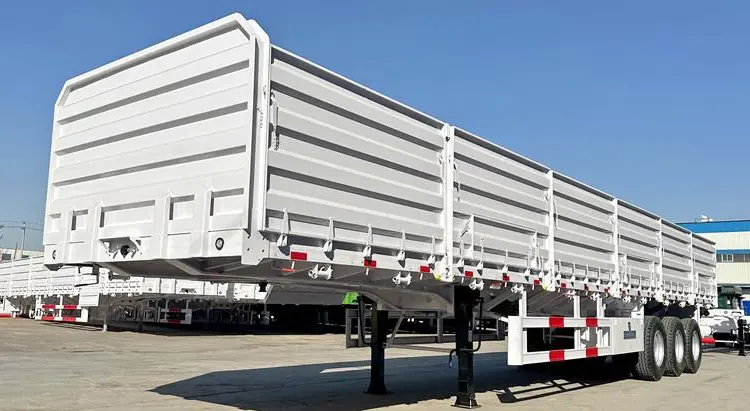
Dropside semi trailer
Flatbed semi-trailers are medium- and long-distance freight vehicles with a flatbed cargo section. Suitable for medium- and heavy-duty and bulk cargo transportation, they are characterized by simple structure and strong adaptability, making them the preferred choice for medium- and long-distance freight transport. This model improves transportation efficiency through optimized cargo box design. The entire vehicle body is made of T700 high-strength steel, and the longitudinal beam height can reach 480 mm.
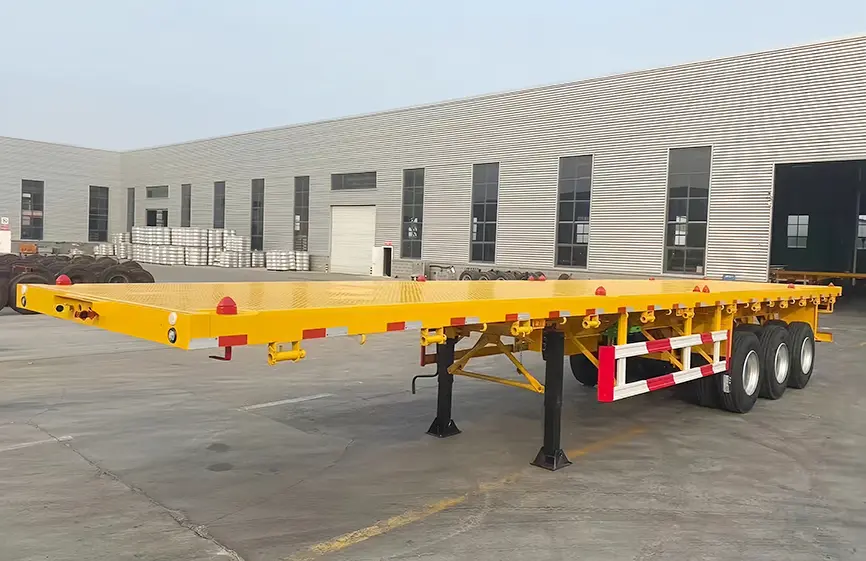
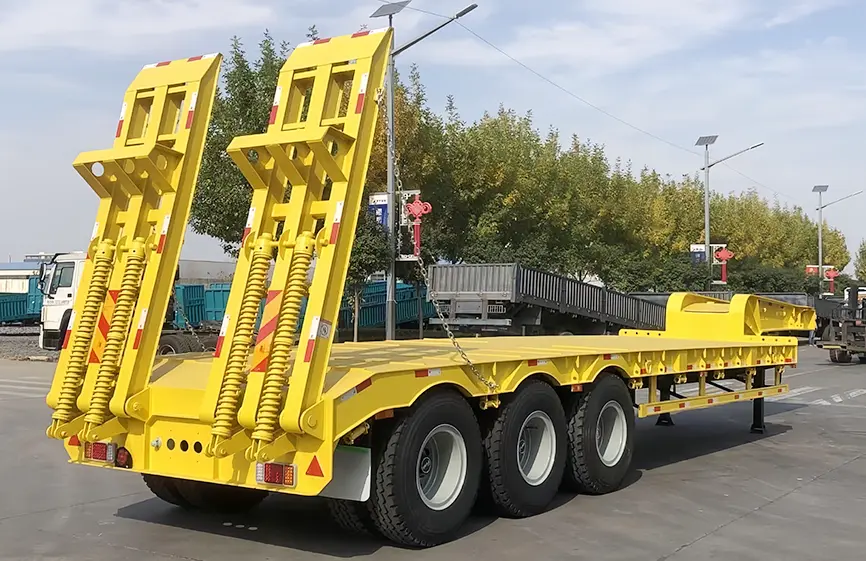
Flatbed semi-trailer
Flatbed semi-trailers are freight vehicles with a flatbed structure design without sideboards. They are connected to a tractor unit via a towing pin and are mainly used for medium- and long-distance freight transportation. The body is made of high-strength steel, with a load capacity of up to 50 tons. They are equipped with safety features such as ABS and 12R-22.5 tires, making them suitable for transporting heavy goods such as construction machinery and large equipment. The flatbed design allows this type of vehicle to transport oversized equipment up to 3.2 meters wide, and the use of strapping and securing allows for the safe transport of irregularly shaped goods (such as excavator arms and steel structural components).
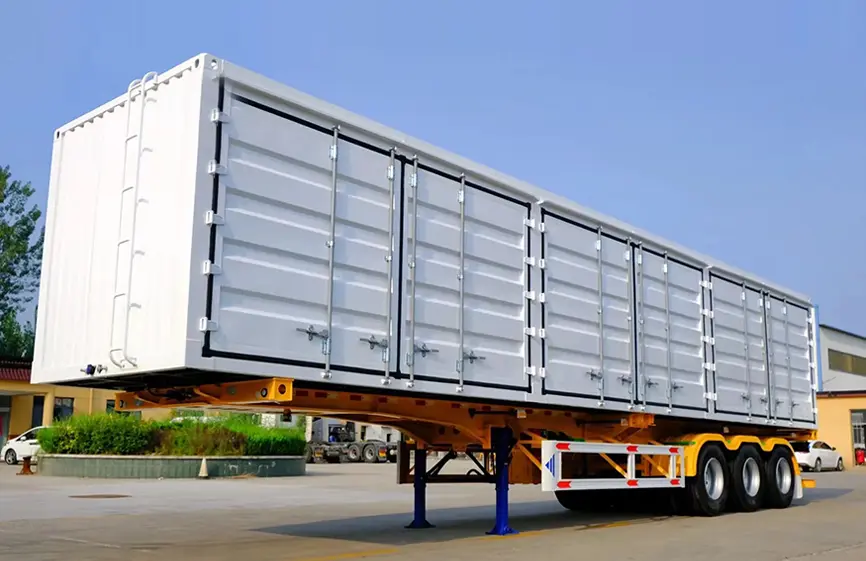
Van semi trailer
van semi trailers are modified or manufactured separately from box truck chassis. Based on their cargo box design, they can be divided into passenger box type and cargo box type. Passenger box type trailers generally have an integrated cargo box and driver’s cab structure, such as ambulances, accommodation vehicles, environmental monitoring vehicles, catering vehicles, and television broadcasting vehicles. Cargo box type trailers generally have a separate cargo box and driver’s cab structure, such as box-type less-than-truckload (LTL) transport vehicles and refrigerated/insulated trucks. The specific structural form of the cargo box varies according to its function. Refrigerated/insulated trucks, in addition to the functions of a general cargo box, also have heat insulation and heat preservation functions; the top of a convertible cargo box can be vertically raised and lowered to change the cargo volume and meet the loading and unloading requirements of different goods; wing-opening cargo boxes facilitate loading and unloading of goods and improve loading and unloading efficiency.
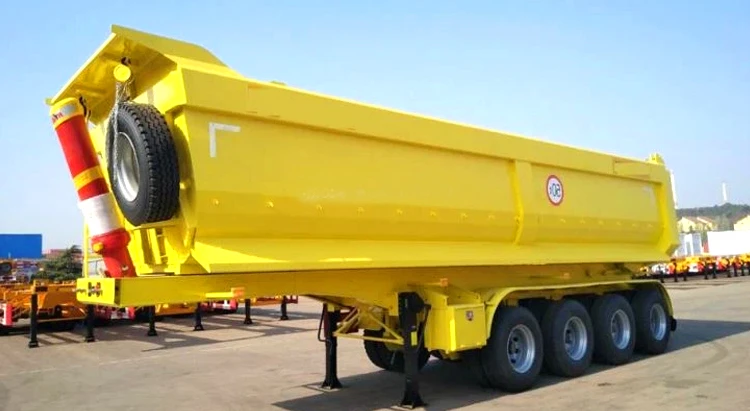
Dump semi trailer
The dump semi-trailer uses a hydraulic system to drive the cargo box for autonomous unloading, primarily offering two operating modes: side-tipping and rear-tipping. Its cargo box utilizes manganese plate welding technology and is equipped with a non-independent steel plate stamping rigid suspension system, enabling the unloading of bulk materials such as sand, gravel, and coal within 30 seconds to 2 minutes, with a lower residue rate than traditional models. The cargo box employs high-strength manganese plate welding technology, and the suspension is a non-independent steel plate stamping rigid suspension system. The side-tipping model is equipped with a hydraulic cylinder lifting system and a tilting bracket structure, and is available in left-side tilting, right-side tilting, and integrated left-right designs depending on the unloading direction. The rear-tipping model uses a piston rod to drive the cargo box to tilt backward; typical configurations include an adjustable hydraulic control power unit and Hyva cylinders, reducing energy consumption by 15% compared to traditional systems.